From PO to Delivery: The Project Lifecycle of Bioprocess Equipment.

Introduction
In the bioprocess equipment industry, successful project execution involves much more than manufacturing and delivering equipment. Every project passes through a series of coordinated activities, starting from the receipt of the Purchase Order (PO) and continuing through engineering, procurement, manufacturing, inspection, documentation, and finally delivery to the client.
From a Project Department perspective, the Project Coordinator plays an important role in keeping all these activities connected. The objective is to ensure that the project progresses as per the agreed scope, specifications, schedule, quality requirements, and client expectations.
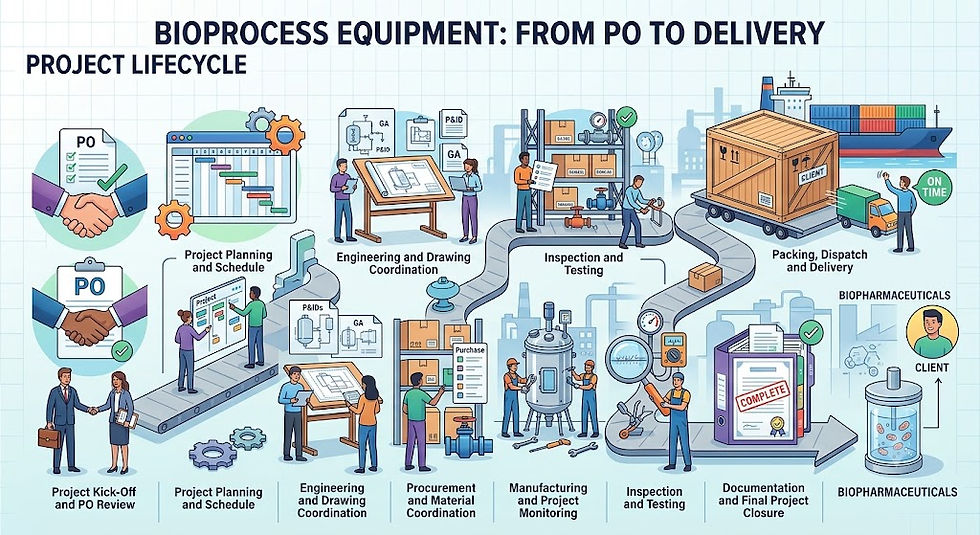
1. Project Kick-Off and PO Review
The project lifecycle begins with the receipt of the Purchase Order. The Project Department first reviews the PO along with the approved quotation, technical specifications, scope of supply, delivery schedule, payment terms, and other contractual requirements.
At this stage, the Project Coordinator identifies important project requirements and coordinates with Sales, Engineering, Purchase, Production, Quality, Automation, and other concerned departments. Any unclear or conflicting requirements are highlighted and clarified before the project moves forward. A proper PO review at the beginning helps avoid misunderstandings and changes at later stages.
2. Project Planning and Schedule
Once the requirements are understood, the Project Department prepares an execution plan and monitors the overall project schedule.
Major activities such as engineering, procurement, manufacturing, inspection, testing, documentation, and dispatch are planned with their respective timelines. The Project Coordinator follows up with the concerned departments and tracks progress against the planned schedule. The key responsibility is to ensure that delays in one activity are identified early and communicated to the relevant stakeholders.
3. Engineering and Drawing Coordination
Engineering is one of the most important stages of a bioprocess equipment project. Equipment drawings, General Arrangement (GA) drawings, fabrication drawings, P&IDs, utility requirements, and other technical documents are prepared or reviewed according to the project requirements. The Project Department coordinates between the client and Engineering team for drawing submissions, comments, revisions, and approvals.
Timely approval of drawings is important because engineering delays can directly affect procurement, manufacturing, and the final delivery schedule.
4. Procurement and Material Coordination
After engineering requirements are finalized, the required raw materials, bought-out components, instruments, valves, pumps, motors, automation components, and other items are arranged. The Project Coordinator monitors the procurement status and follows up on critical materials that may affect manufacturing or delivery.
Coordination between Project, Purchase, Engineering, and vendors helps ensure that required materials are available at the right time and according to the approved specifications.
5. Manufacturing and Project Monitoring
Once the required materials are available, manufacturing and fabrication activities begin.
The Project Department monitors the progress of fabrication and assembly against the project schedule. Regular coordination with Production and Quality teams helps track the status of equipment and identify any issues that could affect the delivery timeline.
At this stage, the Project Coordinator acts as a connecting point between different departments, ensuring that project priorities and client commitments are clearly communicated.
6. Inspection and Testing
Quality inspection and testing are essential before equipment is released for delivery. Depending on the project requirements, activities may include dimensional inspection, welding inspection, pressure testing, electrical checks, instrumentation checks, and Factory Acceptance Testing (FAT). The Project Department coordinates inspection schedules with the Quality team and, where required, with the client or third-party inspector.
Any observations or pending points identified during inspection are tracked until closure so that the equipment can proceed towards dispatch.
7. Documentation and Final Project Closure
Documentation is another critical part of project execution. Depending on the project, documents may include inspection reports, test certificates, material certificates, calibration certificates, drawings, manuals, warranty certificates, FAT reports, and other quality documents. The Project Coordinator follows up with the respective departments to ensure that the required documents are compiled, reviewed, and submitted as per the project requirements. A project is not considered complete simply because the equipment is ready. Proper documentation is equally important for client acceptance, installation, commissioning, operation, and future reference.
8. Packing, Dispatch and Delivery
After inspection, testing, documentation, and clearance of pending points, the equipment is prepared for dispatch. The Project Department coordinates with Production, Stores, Dispatch, Purchase, Logistics, and the client to ensure that the equipment is packed properly and dispatched according to the agreed schedule. Before dispatch, important details such as packing lists, transportation arrangements, delivery address, required accessories, and dispatch documents are verified. The final objective is to ensure that the equipment reaches the client safely, on time, and in accordance with the agreed scope.
The Role of a Project Department.
Throughout the complete project lifecycle, the Project Department acts as a bridge between different departments and the client. The role involves continuous follow-up, planning, communication, documentation, progress tracking, issue escalation, and coordination. A Project Coordinator may not directly execute every activity, but effective coordination ensures that every activity moves in the right direction. The success of a bioprocess equipment project therefore depends not only on the quality of the equipment but also on how effectively the project is planned and coordinated.

Conclusion
The journey from PO to delivery is a structured process involving multiple departments and stakeholders. For the Project Department, successful project execution means maintaining control over scope, schedule, communication, documentation, quality, and delivery throughout the project lifecycle. A well-coordinated project ensures that engineering is completed on time, materials are available when required, manufacturing progresses smoothly, inspections are completed, documentation is properly maintained, and the final equipment reaches the client as committed.
In the bioprocess equipment lifecycle industry, effective project coordination transforms a Purchase Order into a successfully delivered project.


👍