Managing Multiple Tasks in Complex Projects: How to Improve Project Execution through Better Coordination.

Updated: Aug 5
Introduction
Managing multiple tasks in complex projects is one of the biggest challenges faced by project managers today. Large projects often involve several teams, stakeholders, deadlines, and interdependent activities that must be carefully coordinated to achieve successful outcomes. Without proper planning and communication, even a small delay can affect the entire project schedule. Effective project execution depends not only on completing individual tasks but also on ensuring that every team works together toward a common objective. Strong coordination helps organizations improve efficiency, reduce risks, and deliver projects on time and within budget.
1. Effective Planning and Task Organization
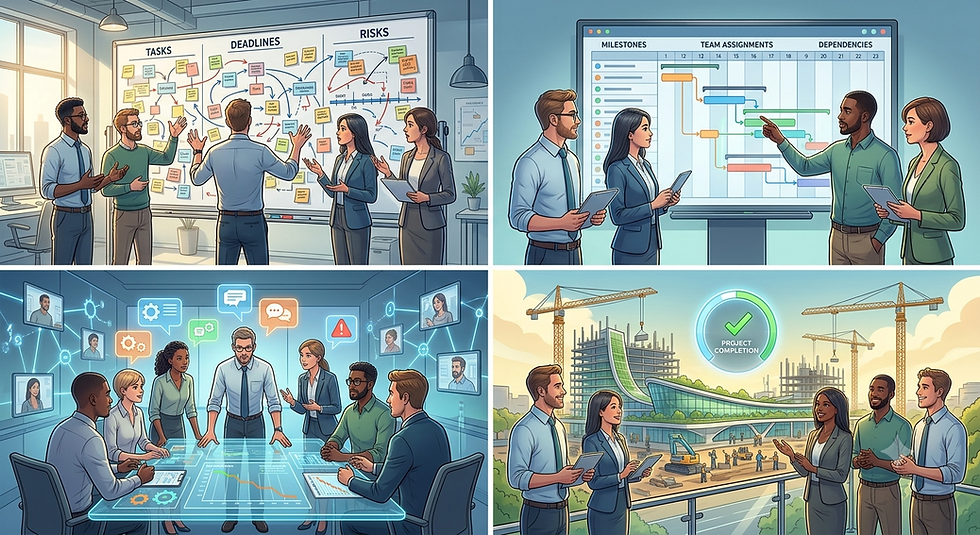
Successful project execution begins with proper planning. Breaking a large project into smaller, manageable tasks allows project managers to assign responsibilities, establish realistic timelines, and monitor progress more effectively. A structured approach provides clarity for every team member and reduces confusion throughout the project lifecycle. Clearly defined tasks also make it easier to identify dependencies and allocate resources efficiently, ensuring that work progresses in the correct sequence.
2. Prioritizing Critical Activities
Not every task contributes equally to project success. Some activities have a direct impact on major milestones, while others can be completed with greater flexibility. Identifying and prioritizing critical tasks helps project teams focus on activities that are essential for maintaining project schedules. Effective prioritization allows managers to make better decisions when resources are limited and ensures that unexpected challenges do not significantly disrupt project progress.
3. Strengthening Team Communication
Clear communication is one of the most important elements of successful project coordination. Complex projects require constant interaction between departments such as engineering, procurement, finance, operations, and quality assurance. Regular progress meetings, project updates, and transparent information sharing help everyone stay informed about project status and upcoming activities. Strong communication also encourages early identification of issues, allowing teams to resolve problems before they affect project performance.
4. Defining Roles and Responsibilities
Clearly defined roles and responsibilities improve accountability and reduce misunderstandings within project teams. Every team member should understand their specific responsibilities, reporting structure, deadlines, and expected deliverables. When ownership is clearly established, work is completed more efficiently, duplication of effort is minimized, and collaboration becomes much more effective across different departments.
4. Managing Task Dependencies
Most complex projects involve activities that depend on the completion of previous tasks. Procurement may rely on finalized designs, production depends on material availability, and testing can only begin after manufacturing is complete. Identifying these dependencies during project planning allows managers to anticipate potential bottlenecks and adjust schedules when necessary. Proper dependency management ensures smoother project execution and reduces the likelihood of costly delays.
5. Leveraging Project Management Tools
Technology plays an important role in improving project coordination. Modern project management software provides a centralized platform for assigning tasks, tracking deadlines, monitoring progress, sharing documents, and generating reports. These tools improve visibility across the project and enable team members to access updated information in real time. Better visibility supports faster decision-making and strengthens collaboration among teams working on different aspects of the project.
6. Proactive Risk Management
Every project faces uncertainties that can impact cost, schedule, or quality. Supplier delays, technical challenges, budget changes, and resource shortages are common risks in complex projects. Identifying potential risks early and developing mitigation strategies helps organizations minimize disruptions and respond effectively when unexpected situations occur. Proactive risk management contributes to greater project stability and increases the likelihood of successful project completion.
7. Optimizing Resource Utilization
Managing multiple tasks requires careful allocation of available resources, including personnel, equipment, budget, and time. Overloading employees or assigning insufficient resources to critical tasks can reduce productivity and create project delays. Regular resource planning ensures workloads remain balanced and that important activities receive the necessary support. Efficient resource utilization improves both project performance and team productivity.
8. Continuous Monitoring and Performance Evaluation
Regular monitoring allows project managers to evaluate whether project activities are progressing according to plan. Tracking key performance indicators such as schedule progress, budget utilization, task completion rates, and issue resolution helps identify potential problems early. Continuous performance evaluation enables managers to take corrective action promptly, keeping projects aligned with their objectives and reducing the risk of significant delays.

Conclusion
Managing multiple tasks in complex projects requires a combination of careful planning, effective communication, strong coordination, and continuous monitoring. As projects become increasingly complex, organizations must adopt structured project management practices that improve collaboration and enhance visibility across all project activities. By prioritizing critical tasks, managing dependencies, optimizing resources, and addressing risks proactively, project managers can improve execution, increase efficiency, and consistently deliver successful project outcomes. Strong coordination remains one of the most important factors in achieving long-term project success.

nice
👍🏻
👍