Beyond Waste, Beyond Protein: The Expanding World of Precision Fermentation

The food industry is entering a new phase of biotechnology one where fermentation is no longer limited to brewing, dairy cultures, or alternative proteins. Precision fermentation is emerging as a platform for transforming underutilized food and agricultural side streams into valuable, functional ingredients.
As manufacturers look for lower-carbon production routes and greater resource efficiency, the combination of food-waste valorization, precision fermentation, and advanced bioprocessing is creating new opportunities across the food and ingredient sectors.

The Technology Shift: From Waste Streams to Valuable Ingredients
Industrial food production generates large volumes of by-products such as whey streams, fruit residues, grain fractions, molasses, and other carbohydrate- or nutrient-rich materials. Instead of treating these streams only as waste, biotechnology can provide routes to recover and upgrade their biological value.
Precision fermentation uses microorganisms such as yeast, fungi, or bacteria to produce targeted compounds under controlled conditions. Depending on the feedstock and microorganism, fermentation can generate proteins, enzymes, flavors, pigments, organic acids, functional ingredients, and other high-value biomolecules.
The shift is significant: rather than simply extracting more raw materials, manufacturers can explore how existing biological resources can become inputs for new production cycles.
This supports a more circular model:
Food production → Side streams → Fermentation → High-value ingredients → New products
However, successful commercialization requires consistent feedstocks, efficient conversion, reliable scale-up, and controlled processing.
Real-World Applications: Where Precision Fermentation Is Expanding
The technology is moving beyond alternative proteins into a much broader range of applications.
Upcycled bio-based materials
Agricultural and food-processing residues can potentially provide carbon sources for microbial processes that produce biomaterials and specialty compounds. These materials can contribute to emerging bio-based applications, including fibers, polymers, and other alternatives to conventional fossil-derived materials.
Precision-fermented fats
Microbial fermentation is also being explored to produce specialty fats and oils with tailored functional properties. This could support applications where manufacturers need specific melting profiles, textures, or nutritional characteristics while exploring alternatives to conventional agricultural inputs.
Clean-label functional ingredients
Precision fermentation can produce highly specific compounds such as enzymes, flavors, proteins, pigments, and other functional ingredients. This creates opportunities for manufacturers seeking consistent, scalable, and potentially more resource-efficient ingredient production.
The common thread across these applications is the ability to use biotechnology to manufacture a defined product rather than relying entirely on conventional extraction from agricultural sources.
The Growing Need for Innovative Bioprocess Equipment
Innovative biology needs equally innovative manufacturing infrastructure. As precision fermentation moves from laboratory development toward pilot and commercial production, bioprocess equipment becomes a critical part of the technology equation.
At the heart of the process is the bioreactor, where microorganisms are cultivated under precisely controlled conditions.
Modern fermentation systems need to manage parameters such as:
Temperature and pH
Dissolved oxygen and aeration
Agitation and mixing
Nutrient feeding
Foam formation
Pressure and temperature
Sterility and hygienic operation
Real-time process monitoring
Scale-up presents another challenge. Conditions that work in a laboratory vessel cannot simply be multiplied into a large production tank. Oxygen transfer, mixing, heat removal, shear, and microbial performance can change considerably with increasing volume.
This is driving demand for scalable, flexible, automated, and energy-efficient bioreactor systems, alongside downstream technologies such as filtration, centrifugation, purification, and drying.
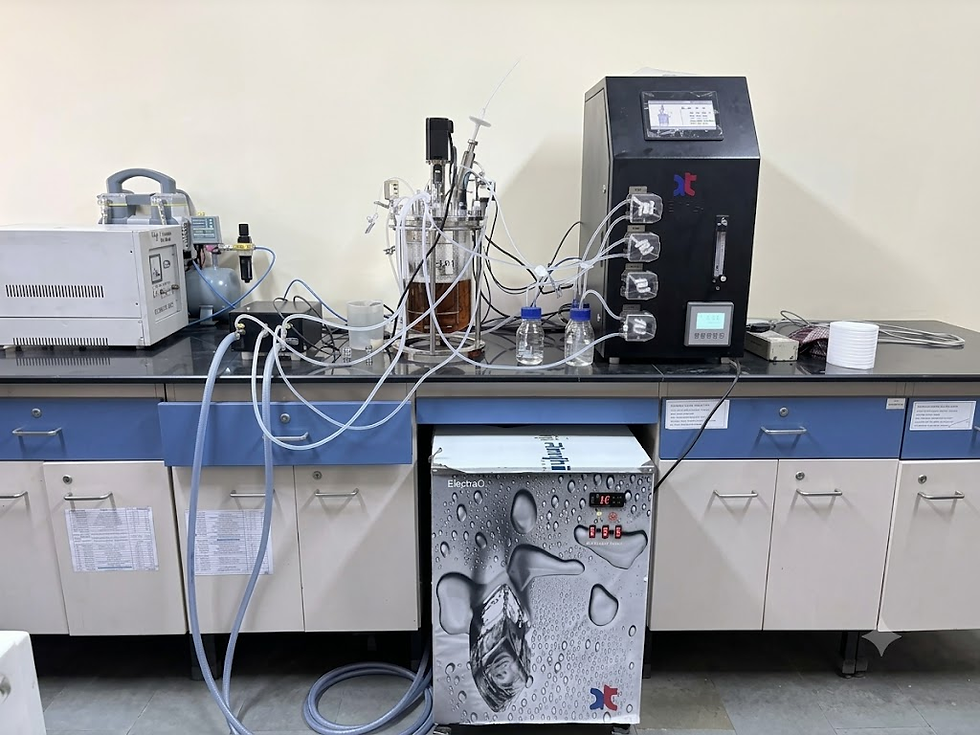
Ongoing Trends Shaping the Next Generation of Fermentation
Several trends are influencing how precision-fermentation facilities are being designed and operated.
Automation and digitalization: Sensors, process analytics, and automated controls are enabling tighter monitoring and greater batch-to-batch consistency.
Flexible bioprocessing: Modular and multipurpose equipment can help manufacturers develop and produce different fermentation-based ingredients using adaptable production platforms.
Circular feedstocks: Greater attention is being given to agricultural and food-industry side streams as potential fermentation inputs, provided they can meet quality, safety, and economic requirements.
Energy and resource efficiency: Future systems will increasingly focus on reducing water, energy, processing time, and waste across both fermentation and downstream processing.
The Road Ahead: Building the Infrastructure for a Circular Bioeconomy
Precision fermentation represents more than a new method for producing alternative proteins. It is becoming a broader biomanufacturing platform capable of connecting food production, biotechnology, and resource recovery.
The opportunity lies in converting underutilized biological resources into products with significantly greater economic value. But achieving this at commercial scale will depend on the entire bioprocess from feedstock preparation and microbial development to fermentation, separation, purification, and formulation.
As this industry evolves, advanced bioreactors and integrated bioprocess equipment will play a central role in turning promising laboratory concepts into reliable industrial production.
The future of food biotechnology may therefore be defined not simply by what we can produce, but by how efficiently we can transform existing resources into the next generation of low-carbon ingredients and bio-based products.


👍